REGENERATIVE BIOMATERIALS
Engineering Biomaterials for
Tissue Repair and Regeneration
Materials innovation. A clearer path toward tissue repair.
KessGen is a biotechnology company developing engineered biomaterials to address complex challenges in tissue repair and regeneration.
By bringing together polymer engineering, biomaterials science, and regenerative research, we investigate adaptable material systems for demanding tissue environments—with an initial focus on wound-care applications.
Our Approach
Complex Tissue Environments. Purposeful Material Design.
Tissue repair presents a changing combination of biological and mechanical demands. Irregular wound geometries, variable fluid conditions, and movement at the tissue interface create distinct challenges for wound-contact materials.
At KessGen, we approach these challenges through materials engineering.
Our research considers how delivery, conformability, hydration, and structural integrity can be designed together, alongside the biological evaluation required for an intended application.
The goal is to connect material design with the practical demands of tissue repair—not simply to develop new materials, but to understand where and how they may be useful.
Our Technology
Engineered for Adaptability.
Guided by Science.
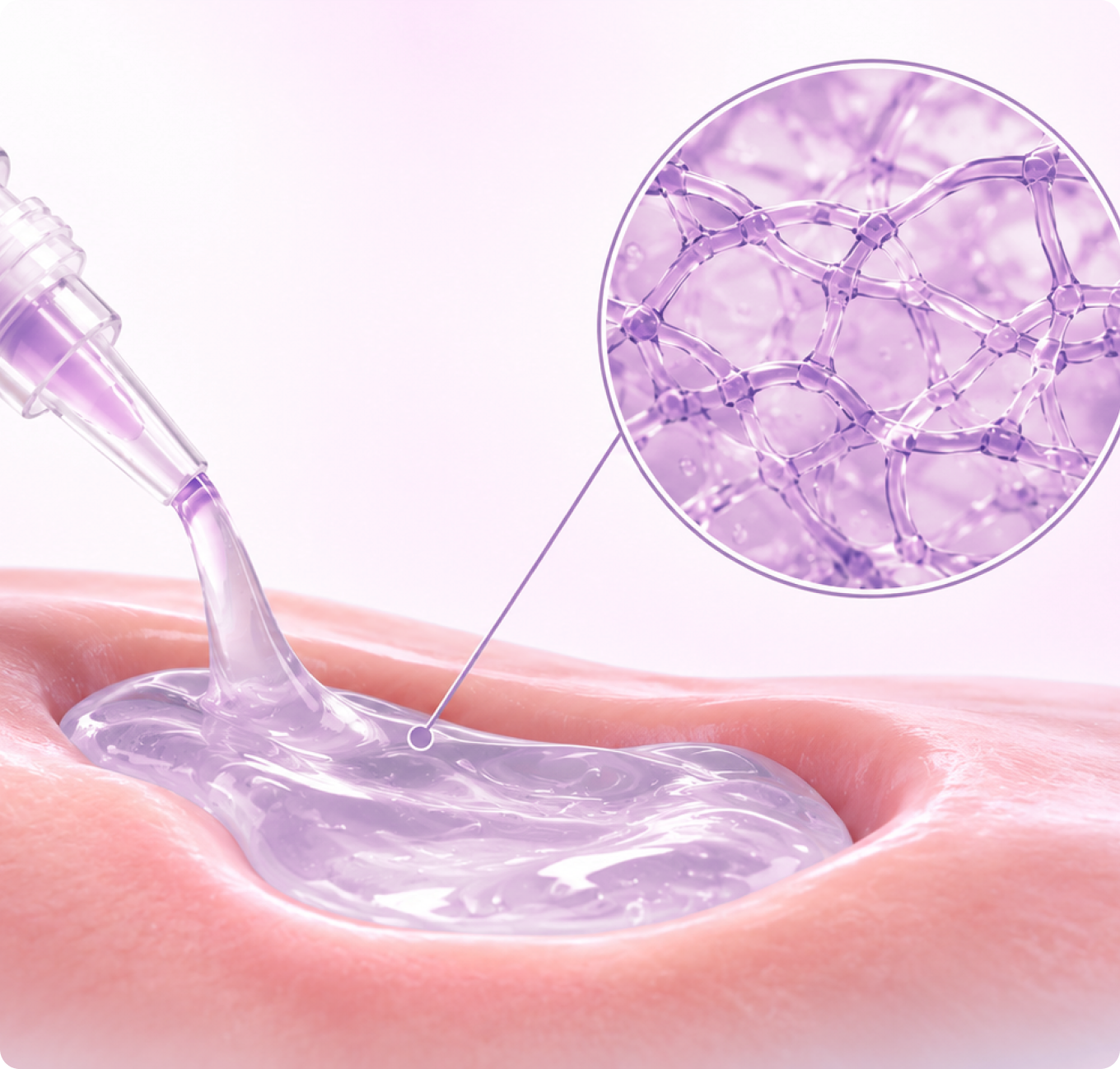
Our research centers on injectable hydrogel systems, complemented by the exploration of macroporous cryogel scaffolds. These material formats offer different ways to investigate the relationship between structure, handling, and tissue contact.
Injectable Hydrogel Systems
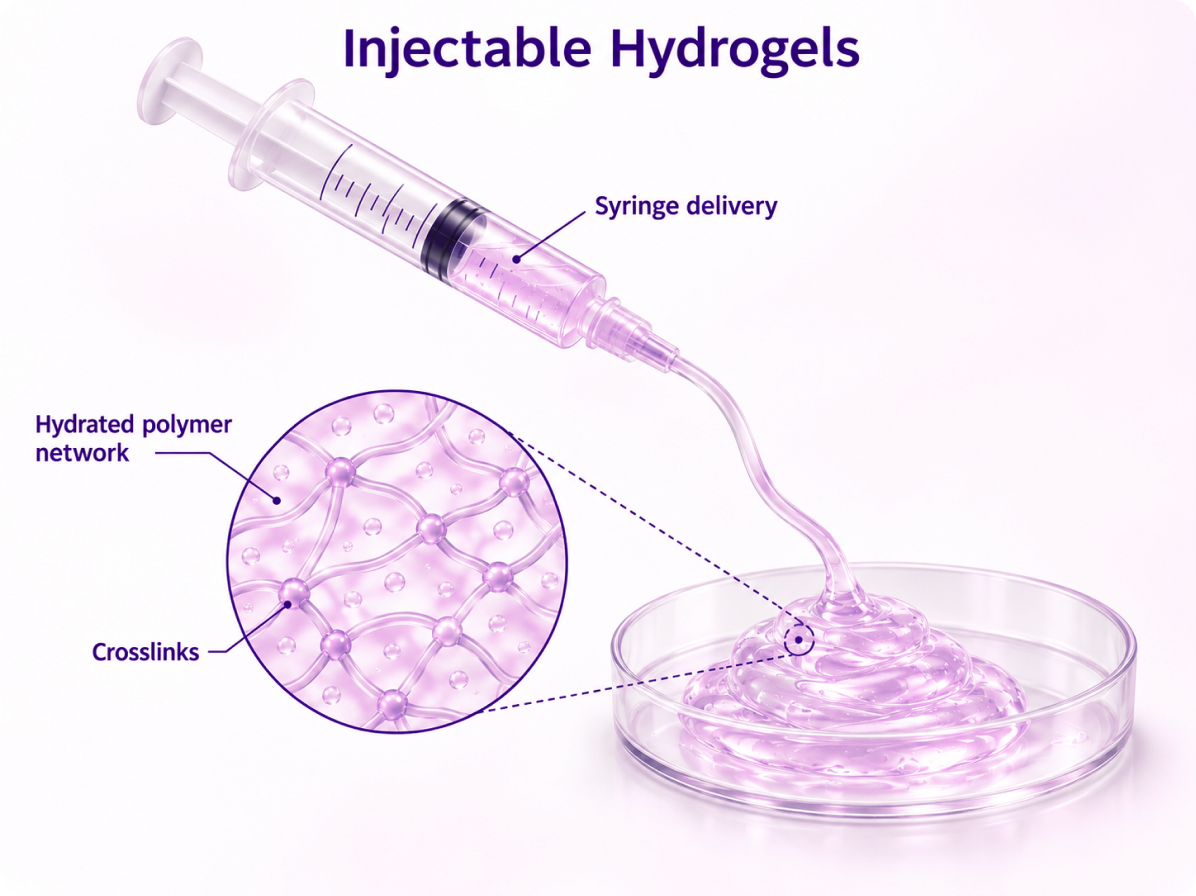
We are developing polymer-based formulations designed for delivery in a flowable state and subsequent formation of a hydrated network under defined conditions. This approach supports the investigation of materials that can accommodate irregular geometries before network formation.
Engineered Cryogel Scaffolds
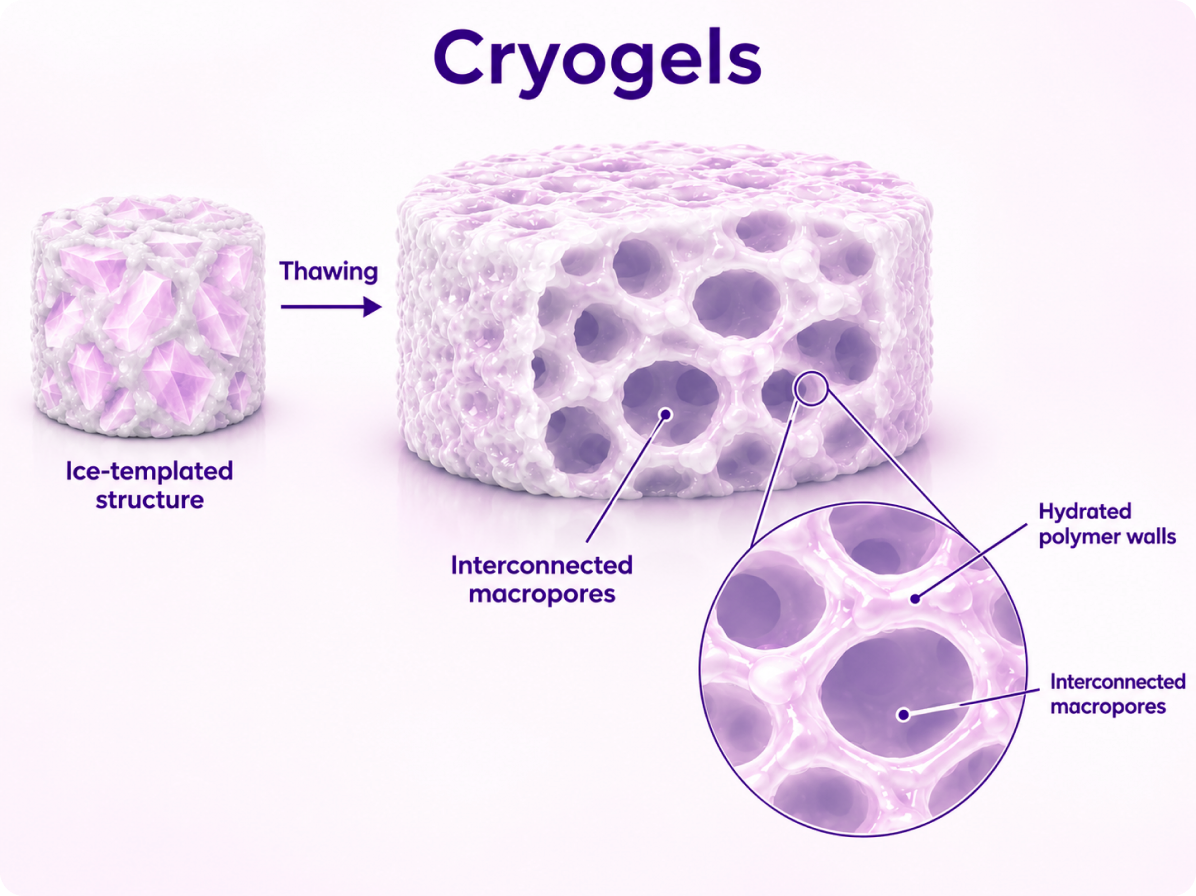
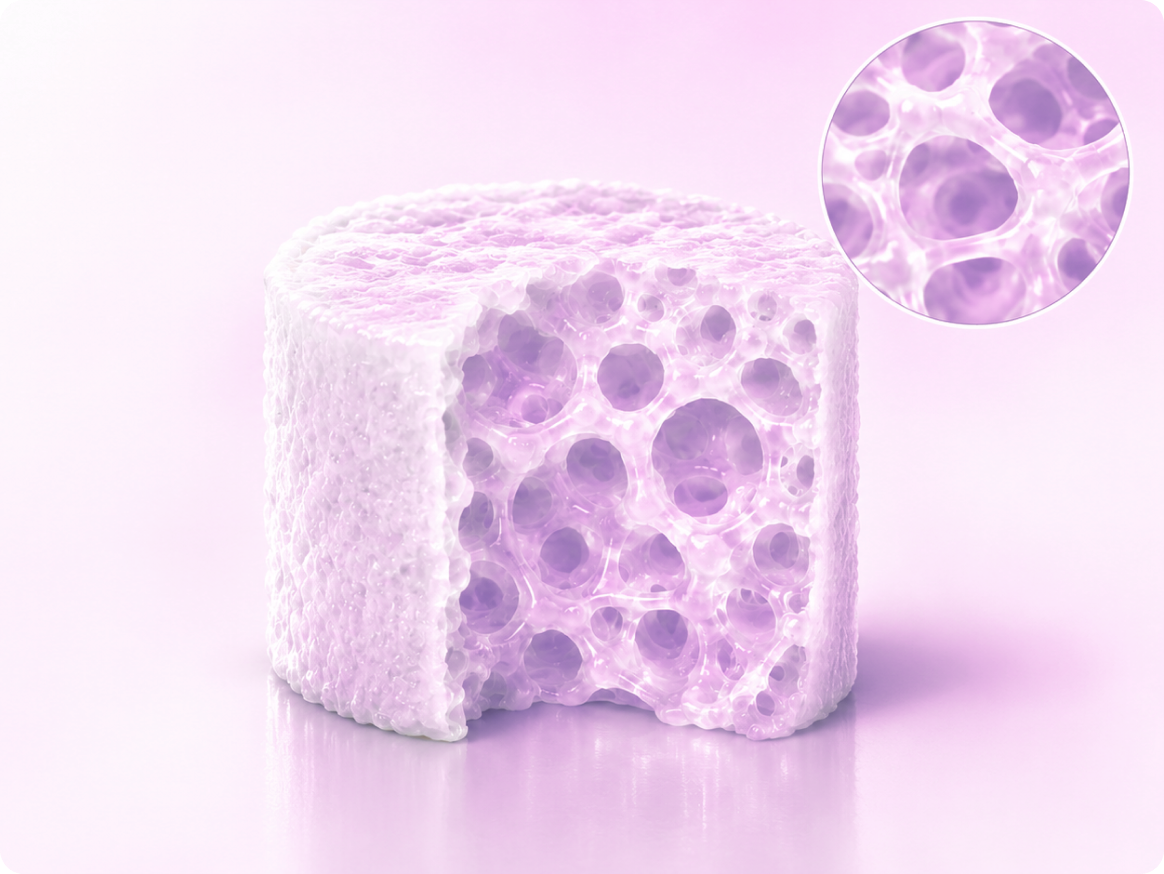
Our complementary scaffold research explores macroporous cryogel architectures, with attention to pore structure, hydration, and mechanical behavior. We investigate how these features may inform material design for tissue-engineering and tissue-repair applications.
Scientific Research
Connecting Composition, Structure, and Function
A material’s behavior depends on how it is formulated, structured, delivered, and exposed to its intended environment. Our research connects these considerations through polymer engineering and systematic material characterization.
We investigate the relationships among network formation, mechanical behavior, fluid interaction, and biological response to guide the development of application-relevant biomaterials.
Potential Applications
Focused on the Challenges of Tissue Repair
Our research interests span wound care and regenerative medicine, with an initial emphasis on complex wound environments in veterinary applications.
Areas of interest include:

Biomaterials for complex wound environments

Conformable materials for irregular tissue defects

Hydrated wound-contact systems
Scaffolds for tissue-engineering research
Application-specific evaluation guides the selection and further development of each material system.
Market Opportunity
A Growing Opportunity in Advanced Veterinary Wound Care
Veterinary wound care is an expanding market, with advanced dressings projected to grow faster than the overall sector. Mordor Intelligence forecasts the global animal wound care market to increase from USD 1.55 billion in 2026 to USD 2.25 billion by 2031, at a compound annual growth rate (CAGR) of 7.74%. Within this market, advanced dressings—including hydrogel, foam, and hydrocolloid dressings—are projected to grow at 8.32% annually over the same period.
This outlook provides a market context for KessGen’s focus on adaptable hydrogel systems for complex veterinary wound environments. Our research aims to connect material innovation with application-specific needs, with future commercial opportunities guided by evidence, practical usability, and further development.
USD 2.25 billion
Forecast global animal wound care market by 2031, up from USD 1.55 billion in 2026
7.74%
Forecast compound annual growth rate for the global animal wound care market
8.32%
Forecast annual growth for advanced dressings, including hydrogel, foam, and hydrocolloid dressings
Source: Mordor Intelligence, Animal Wound Care Market Size & Share Analysis—Growth Trends and Forecast (2026–2031), updated September 11, 2026. Figures are market-research projections, not guaranteed outcomes. The overall market values do not represent the advanced-dressings segment alone.


Collaboration & Partnerships
Bringing Expertise Together
to Advance Biomaterials
Progress in regenerative biomaterials depends on complementary expertise. We welcome researchers, academic institutions, industry specialists, strategic partners, and funding organizations interested in connecting material innovation with tissue-repair challenges.
From polymer chemistry and scaffold characterization to biological assessment, we seek collaborations with clear scientific objectives and shared development goals.